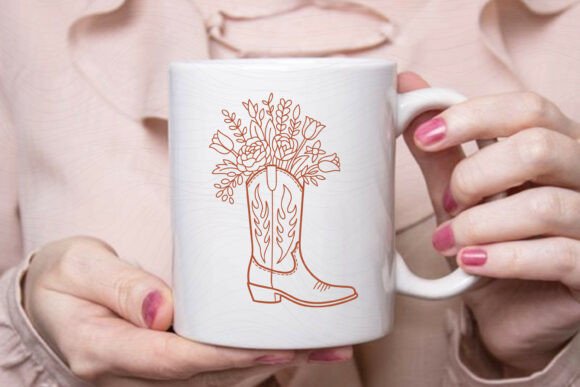
A Cowboy Boot Filled with Wildflowers SVG for Crafted Business Graphics
As a brand designer preparing visuals for a new client—a boutique florist launching a line of wildflower subscription boxes—I received the Cowboy Boot Filled with Wildflowers SVG graphic design asset for review. My first task is always to assess not just its aesthetic appeal, but its practical potential for real-world local business branding. My initial impression is immediately clear: this asset evokes a distinct mood of rustic charm, organic warmth, and playful Americana.
The Rustic & Feminine Brand Personality Suggested by This Graphic
The composition, a classic cowboy boot overflowing with a loose bouquet, suggests a brand personality that is handmade, friendly, and grounded. It leans away from cold minimalism and toward decorative, story-driven visuals. This isn’t a generic clipart; it feels crafted. The style suggests it would fit businesses that celebrate natural ingredients, local heritage, or artisanal creation. It could work beautifully for a small-batch candle brand using native botanicals, a children’s product line with a Western theme, a bakery specializing in rustic pies, or, as in my current project, a florist focusing on wild, locally-sourced arrangements. The design feels festive and soft rather than bold or corporate.
From Digital Product to Physical Packaging: Real-World Applications
For my florist client, the practical use of this SVG extends far beyond a simple website graphic. The vector format means I can scale it perfectly for various touchpoints. A primary application is product label design. I can adapt the boot graphic as a hero element on the subscription box lid, creating instant shelf appeal and product recognition. The white and black versions included offer crucial flexibility; the white version can be dropped onto a dark kraft paper label, while the black can be used on lighter, creamy stock for hang tags.
This asset supports consistent brand identity across multiple materials. I envision using a simplified portion of the wildflower cluster on business cards and a full version on the website’s hero banner. For social media graphics promoting a “Spring Wildflower Collection,” this illustration becomes the central visual for posts and ads, strengthening emotional connection with the local community. It can be incorporated into printable inserts—thank-you cards or care instructions tucked into each box—adding a polished, decorative accent that elevates the unboxing experience.
Building Customer Trust Through Cohesive Visuals
In local business branding, cohesion builds trust. A customer who sees the same evocative graphic on the shop’s Instagram, the physical product packaging, and the flyer at a local market perceives a more professional and deliberate brand. The Cowboy Boot Filled with Wildflowers SVG acts as a versatile anchor for this. For a handmade soap business, it could be embossed on a wrapper. For a coffee shop with a Western vibe, it could adorn menu graphics or price list headers. Its decorative nature makes it ideal for promotional banners for seasonal campaigns, like a “Summer Harvest” sale for a home decor shop.
Where This Design Asset Works Best and Where to Use Caution
This graphic shines as a decorative brand element rather than a literal logo mark. Its best uses are on larger surfaces or as an accent: product labels with ample space, packaging side panels, boutique window decals, or the backdrop of a product mockup for an online store. It supports a stronger first impression when given room to breathe.
However, a brand designer must apply it carefully. It should not be crammed into very small labels, like a tiny ingredient sticker on a jar, where detail would be lost. On crowded product packaging with lots of text, it could compete with important information like legal disclaimers. It is not suited for luxury minimalist brands seeking sleek, typographic identities. Similarly, on low-contrast backgrounds (e.g., a pale boot on a cream background), its impact and readability would diminish. For formal corporate branding, this asset would feel out of place.
Practical Notes from the Brand Designer’s Desk
Before committing this asset to client work, I follow a checklist. First, I test it on real packaging mockups—viewing it at actual print size on a box template. I check the black and white versions in context to ensure they function without color. I preview it scaled down to the size of a small sticker to confirm the lines remain clear.
Critical to integration is testing it alongside the brand’s typography. I place the SVG beside a serif font for a classic feel, a clean sans serif for a modern mix, and even a script font to see if the pairing becomes too ornate. For my florist project, a friendly handwritten font might complement it well. I also verify the commercial licensing for use in physical product sales and promotional material—a must for any graphic sourced from a creative marketplace.
Finally, I assess its editability. As an SVG, can I easily modify colors to align with the brand’s palette? Can I separate the boot from the flowers if needed for a simpler version? This flexibility is key for creating a cohesive visual hierarchy across different applications, from a detailed poster to a simplified web icon.
The Final Verdict for Small Business Branding
The Cowboy Boot Filled with Wildflowers SVG is more than a digital product for crafts; it’s a potent graphic design asset for building a tangible brand world. For local businesses selling handmade goods, food with character, or services rooted in community, it offers a ready-made visual story. When applied thoughtfully—to packaging accents, social media campaign graphics, and decorative marketing visuals—it helps transform a simple product into an experience. It supports better product recognition, more consistent brand identity, and ultimately, a more polished and trustworthy presentation to the customer. For designers working with real small business branding projects, assets like this provide a foundational creative element that, with strategic application, can define a brand’s entire visual mood.