The Honk & Bonk Goose: A Designer’s Embroidery Perspective
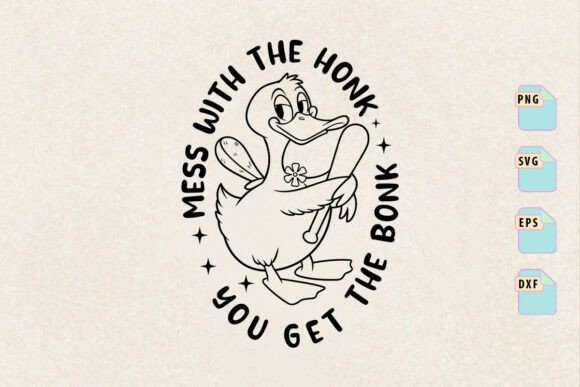
Let’s talk about this Goose Svg, Goose Png, Honk Svg design from a real embroidery standpoint. I’m looking at it not just as a graphic, but as a potential machine embroidery file that needs to become stitches on fabric. My first impression? It’s playful, bold, and has that cheeky “You mess with the honk, you get the bonk” attitude. The visual personality is direct and humorous, which immediately suggests it belongs on relaxed, casual items. The layout is clean, with the text integrated as a central element of the joke, not just a subtitle. This isn’t a delicate, ornate design; it’s a statement piece.
Where This Goose Finds Its Nest in Your Projects
In practical terms, this design feels destined for custom apparel and handmade gifts where personality is key. Imagine embroidering it on a cozy, heavyweight sweatshirt or a sturdy canvas tote bag. The bold lines and clear text would translate well into satin stitches for the lettering and fill stitches for the goose’s form, creating a substantial, eye-catching piece. For a baby item, like a soft jersey knit blanket, simplifying it as an applique design with the goose shape could be adorable, though you’d likely omit the text for a nursery. As an embroidered patch, it would be fantastic—easy to stitch onto a backpack or cap, offering that handmade, personalized gift vibe instantly.
For small business merchandise, this has clear appeal. An Etsy seller focusing on humorous kitchen towels or aprons could use this for a great holiday embroidery gift. A boutique selling trendy tees could leverage it for a limited run. The “honk” and “bonk” theme is highly recognizable and engaging, which boosts buyer engagement. It feels giftable and shareable, adding to the product value. When you stitch it cleanly, with good thread color contrast, it reinforces customer trust through a professional, crisp handmade presentation.
The Real-Life Embroidery Scenario: A Custom Tote
Picture this: a client requests a unique, funny tote bag for a friend. You choose this Goose design. In the hoop, you’re thinking about stitch density. The text, especially “bonk,” needs clarity. You’d likely run a test on scrap fabric first—a crucial designer habit. You’d check how small details, like the goose’s beak or the spaces between letters, hold up at your intended hoop size. On a dark fabric background, you’d plan thread colors carefully, perhaps a bright white or yellow for maximum pop. Using proper stabilizer is non-negotiable here to keep the fill stitches smooth on the bag’s textured fabric.
Careful Stitching: Where to Proceed with Caution
This design invites some practical considerations. On very small hoop sizes, the lettering could become a challenge, risking loss of stitching clarity. Tiny lettering needs precise digitizing; since we’re evaluating a provided graphic, you’d need to confirm the embroidery file’s suitability for small-scale work. On thin or stretchy fabric, like a lightweight t-shirt, the design’s density might cause puckering without the right stabilizer strategy. On curved surfaces like caps, the layout’s width needs to fit the crown without distortion.
For products needing frequent washing, like apparel, ensure your stitch choices are robust. Dense stitch areas in the goose’s body should be tested for durability. Also, consider the end-use: a kitchen towel embroidered with this would be a hit, but placing it away from high-friction edges would preserve the decorative accents. The mood is fun, so it might not fit brand consistency for a serious corporate shop, but for a craft business with a playful voice, it’s perfect.
Turning a Graphic into a Stitched Product: Designer Notes
My process always involves a few key steps before committing a design like this Goose Svg to a finished product. First, test it in black and white mockups to judge form without color bias. Compare it on light and dark fabric backgrounds digitally to plan your thread palette. If you’re creating digital embroidery files for sale, this graphic serves as a strong base for printable mockups and design assets.
Crucially, always confirm the licensing before selling finished items or commercial embroidery projects. The product description mentions versatility for crafting and small business, but you must verify the terms for your specific use—whether for personal gifts or commercial digital product sales. Check the provided file formats for your machine compatibility. Advice: never assume; always check.
For visual appeal, this design’s strength is its straightforward composition. It doesn’t have overly intricate corners that would snag in embroidery, which is a plus. The stitching clarity will depend largely on your digitizing skill or the quality of the provided embroidery file. A clean stitch result here directly boosts professionalism and makes the product feel premium, even as a fun gift.
Final Thoughts on the Goose’s Flight Path
In the hands of a maker, this Goose Png, Honk Svg becomes more than a graphic. It’s a potential centerpiece for an embroidered patch on a denim jacket, a cheerful accent on a pillow cover for a quirky home, or the star of a holiday gift sweatshirt. Its mood creates connection and laughter, which is a valuable commodity in the handmade world. For embroidery designers and creative entrepreneurs, it offers a clear path to a finished product that people will recognize and enjoy. Approach it with practical respect for the embroidery process—test, plan, stabilize—and this honking goose will deliver a bonk of satisfaction in your craft business or next embroidery project.